

How LLM SEO Is Changing Online Visibility in the AI Search Era
Online visibility is no longer shaped only by rankings on a traditional search results page. More people now use AI-powered search experiences to ask complex questions, compare options, and get summarized answers before deciding which sources to explore.
That is why LLM SEO is becoming a more important concept for brands that want to stay discoverable as search behavior moves toward AI-generated responses. Google says AI features like AI Overviews and AI Mode are now part of Search, and OpenAI says ChatGPT search connects people with original, high-quality web content inside the conversation.
That shift is also changing how marketers think about measurement. It is no longer enough to know where a page ranks for a keyword if users are getting their first impression from an AI summary instead.
Wellows presents itself as an AI Visibility Platform and says it helps teams track visibility, citations, sentiment, and intent across leading AI platforms, reflecting how discoverability is moving beyond classic rankings into answer-level visibility.
The Search Experience Is Becoming More Conversational
Traditional search often starts with a short keyword phrase. AI search often starts with a full question. Instead of typing a fragmented query, users now ask for comparisons, recommendations, explanations, or next steps in natural language. Google’s documentation for site owners makes clear that AI features are part of how modern Search works, while OpenAI describes ChatGPT search as a way to bring web content directly into the chat experience.
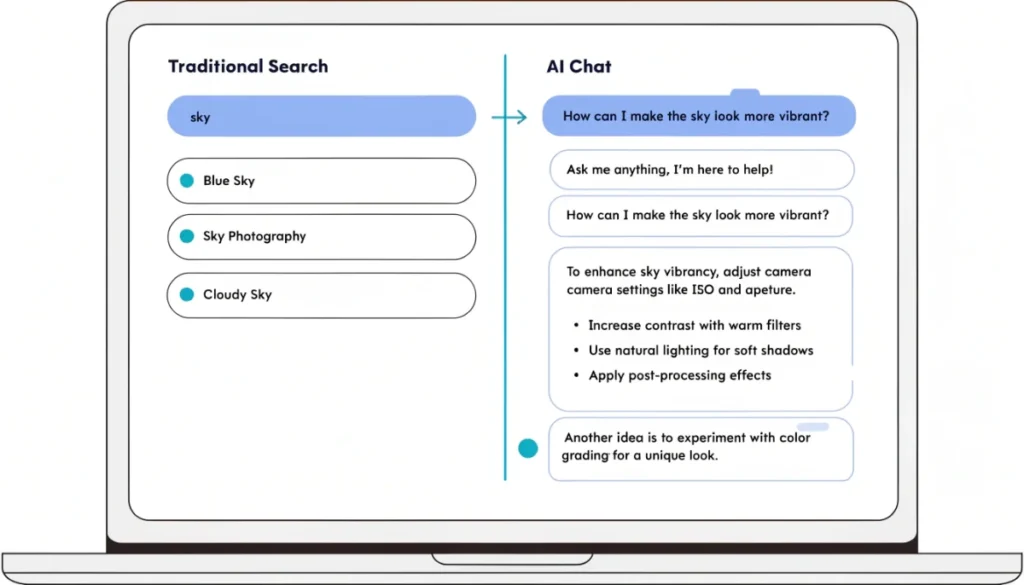
That changes visibility in a practical way. A brand may still rank well in standard search, but if it is not surfaced or cited when AI systems assemble an answer, it can lose attention early in the discovery process. In the AI search era, being present in the response itself matters more than it used to.
LLM SEO Expands What “Ranking” Means
The core idea behind LLM SEO is simple. Visibility now depends not only on whether a page can rank, but also on whether its content can be understood, selected, and cited by AI systems. Google says the same SEO best practices still matter for AI features in Search, which means strong foundations remain critical. But the end goal is broader than a single position on a results page.
That is why LLM SEO is best understood as an expansion of SEO, not a replacement for it. It still depends on useful content, technical accessibility, and relevance. But it also places more weight on how clearly a page answers a question, how well it signals expertise, and how easily its information can be extracted and summarized when an AI system builds a response.
Traditional SEO Still Matters, but It Is No Longer the Whole Story
A lot of the old rules still apply. If a site is difficult to crawl, poorly structured, or filled with weak content, AI visibility will not fix that. Google explicitly says standard SEO best practices remain relevant for AI features in Search, which reinforces that the fundamentals are still the base layer of discoverability.
But there is now another layer on top of that foundation. Content has to work not only for search engines and human readers, but also for AI systems that need to interpret the topic quickly. Pages that explain a subject clearly, organize ideas well, and answer real questions directly are more useful in that environment than pages built around vague claims or keyword repetition.
Content Needs to Be Easier to Understand
In the AI search era, clarity has become a competitive advantage. A page that takes too long to reach the point or buries its value inside generic copy is harder to reuse in an AI-generated answer.
By contrast, content with strong headings, direct explanations, clear definitions, and logical flow is easier to interpret. Google’s documentation on AI features is written from that exact site-owner perspective: how to approach content inclusion in AI search experiences.
This is one reason LLM SEO often overlaps with better content strategy. It pushes brands to answer the question earlier, structure the page more clearly, and remove unnecessary filler. Those changes help users, but they also make the content more likely to be useful when an AI system is selecting supporting sources.
Topical Authority Carries More Weight
AI search does not reward isolated relevance as strongly as marketers might hope. It becomes easier for a site to be associated with a topic when that site shows real depth around it.
A single article may help, but a connected group of pages covering the topic from multiple angles sends a stronger signal that the brand is genuinely authoritative in that space. Google’s broader Search documentation also emphasizes how Google understands site content and uses structured signals to interpret pages.
That is why LLM SEO often favors topic ecosystems over one-off posts. A company that publishes a product page, a comparison guide, a beginner explainer, an FAQ page, and a use-case article around the same subject is easier to understand than a company with one thin page and little supporting context. In practice, that deeper coverage makes online visibility more resilient across both traditional and AI-led discovery.
Quality Becomes More Important Than Scaled Volume
The AI search era can tempt brands to publish faster. That does not mean publishing better. Google’s guidance on generative AI content says AI can be useful for research and structure, but generating many pages without adding value for users may violate its spam policy on scaled content abuse.
For LLM SEO, that matters a lot. Low-value, repetitive pages may add noise without building trust or discoverability. A smaller set of strong pages with real clarity, specificity, and usefulness is more aligned with how modern search systems reward content. In other words, quality still beats quantity, even when AI is part of the workflow.
Citations and Brand Framing Matter More
In standard SEO, a click often tells the story. In AI search, the mention itself can shape perception before the click happens. When a brand is cited, summarized, or described inside an answer, users start forming an opinion before they ever land on the site.
OpenAI says ChatGPT search is designed to connect users with original, high-quality web content, which reinforces the growing importance of being discoverable at the answer layer, not just at the page level.
That makes brand framing more important than before. It is not just about being present. It is also about being associated with the right topics, use cases, and strengths when people ask AI tools for help. LLM SEO is partly about improving those associations through stronger content and clearer topical relevance.
What Marketers Should Focus on Now
The practical response is not complicated. Start with the fundamentals: technical SEO, crawlable pages, strong internal linking, and useful content. Then improve structure by making pages easier to scan and easier to summarize.
Lead with direct answers, use descriptive headings, and create content around the real questions people ask. Google’s own guidance supports this direction by saying standard SEO best practices remain relevant for AI features in Search.
Then build depth. Instead of treating every article as a standalone asset, connect related pages into clear topic clusters. Focus less on publishing large volumes and more on making each page genuinely useful. In the AI search era, the brands that explain things best are often the brands that stay visible longest.
Conclusion
LLM SEO is changing online visibility because search itself is changing. As AI-generated answers become a more common starting point for discovery, brands need to think beyond rankings alone. They still need strong SEO fundamentals, but they also need content that is clear, trustworthy, structured, and easy for AI systems to understand and cite.
That is the real shift in the AI search era. Online visibility now depends on whether your content can earn a place in the answer, not just a place on the page. Brands that adapt to that reality early will be in a better position to stay discoverable as search behavior keeps evolving.