
How Marketplace Technology Is Solving Fashion’s Overstock Problem
Fashion’s overstock problem is not new. Brands have overproduced since the industrialization of clothing manufacturing. But the scale of the problem in 2026, combined with new regulatory pressure and the emergence of purpose-built technology infrastructure, has made inventory surplus one of the most actively discussed operational challenges in the industry – and one of the most interesting areas of marketplace innovation.
The Scale of the Problem
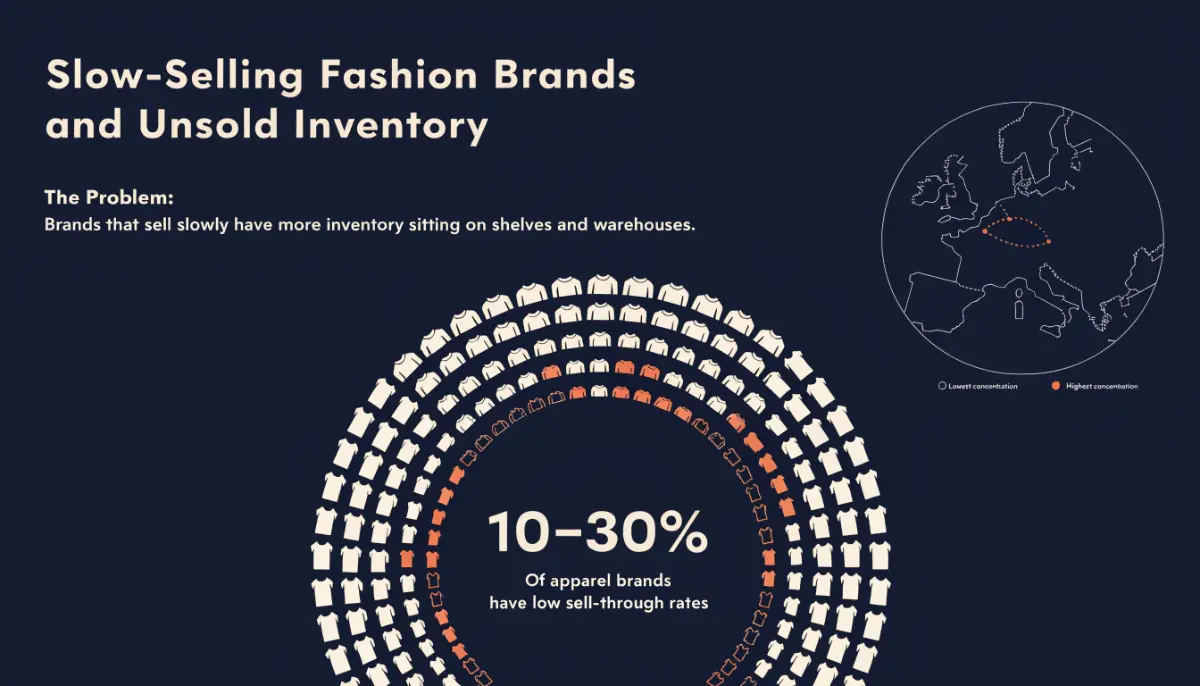
Estimates consistently suggest that 10-30% of total global fashion production goes unsold through primary retail channels each year. Applied to the European fashion market alone, this implies hundreds of millions of garments and accessories that need to find an alternative path to the end consumer – or face destruction, which both regulation and ESG reporting frameworks are increasingly prohibiting.
The problem has structural causes. Production runs must be committed months before delivery. Demand forecasting models, however sophisticated, cannot perfectly anticipate the seasonal variation, trend shifts, and macroeconomic volatility that characterize consumer fashion spending. The result is systematic overproduction that accumulates across the industry whenever actual demand falls short of forecast.
What changes year over year is not the existence of the problem, but the infrastructure available to manage it.
Traditional Approaches and Their Limits
The conventional toolkit for managing fashion surplus inventory includes:
Outlet channels – brand-operated outlet stores and outlet village presence. Requires capital investment, geographic reach, and brand-appropriate presentation. Accessible only to larger brands with the operational infrastructure to manage a parallel retail network.
Off-price retail partners – selling surplus to chains like TK Maxx or Vente-Privée. Fast and volume-capable, but margin recovery is low, brand control is minimal, and the brand-discount association is public and traceable.
Professional liquidators – selling entire lots to intermediaries who then distribute to diverse end buyers. The fastest channel for clearing large volumes, but consistently produces the lowest margin recovery (often 10-20 cents on the retail euro) and provides no visibility or control over final destination.
Informal distributor networks – calling existing contacts to offer surplus at negotiated prices. Works for brands with deep distributor relationships, but produces inconsistent pricing, limited volume capacity, and no systematic process.
None of these approaches combines high margin recovery, brand control, and scalable reach. That combination is what technology has begun to provide.

The Platform Technology Layer
The category of private B2B wholesale platforms represents the most significant technological intervention in the fashion overstock market of the past decade. These platforms do not simply digitize the existing liquidation process – they restructure it.
The core technology stack of an effective fashion B2B marketplace includes several functional layers that traditional channels cannot replicate:
Buyer verification and segmentation. Rather than selling to any buyer willing to pay, platforms verify business credentials for every buyer in the network. More importantly, they enable supplier-side filtering: a brand can specify that a given listing is visible only to offline boutiques, only to buyers in countries where the brand has no current-season distribution, or only to buyers who have passed a turnover threshold that suggests appropriate purchasing capacity. This is not possible in traditional liquidation.
Geo-blocking and selective visibility. Brands that sell excess inventory don’t want their surplus appearing in markets where they have active full-price distribution. Platform-level geo-blocking allows suppliers to limit which geographic markets can see a listing. A brand liquidating inventory in Eastern European markets can be invisible to its own authorized retailers in Western Europe.
Anonymous listing architecture. Some brands resist using surplus channels because they don’t want their name associated with off-price positioning. Platforms that support anonymous listings – where product appears with generic category descriptions rather than brand identifiers – allow these brands to sell excess fashion inventory without public-facing brand-discount association.
Real-time inventory management. Surplus inventory depreciates with time. Every day a listing sits unsold is margin erosion. Platform listing technology that creates urgency – time-limited offers, real-time buyer notifications, live inventory counters – accelerates transaction velocity compared to any relationship-based channel.
Upfront payment and zero-commission models. Rather than the revenue-share or delayed-payment models common in traditional liquidation, some platforms offer suppliers immediate payment upon confirmed sale with no percentage-based commission. This changes the cash flow profile of surplus management for suppliers substantially.
The Data Layer
Beyond the transaction infrastructure, the most sophisticated platforms in this category are beginning to generate data that has strategic value beyond individual transactions.
Geographic demand signals – which product categories move fastest in which markets – give suppliers actionable intelligence for future production planning. Buyer behavior patterns – how quickly different buyer profiles transact on different product types – inform pricing optimization. Supply velocity data tells operationally sophisticated brands how to time their surplus listings for maximum price realization.
This data layer is nascent but directionally important. The platforms that build it at scale will have a significant competitive advantage in the next phase of the market’s development.
What This Means for Brands
For brand managers and supply chain directors, the practical implication of this technology evolution is that surplus inventory management no longer needs to be a last-resort fire sale. The process can be systematized, controlled, and integrated into annual inventory lifecycle planning.
Brands that approach end-of-season and overrun inventory with a defined process – verified private platform, geo-blocked from active distribution markets, filtered to appropriate buyer types, anonymized where needed – consistently report better outcomes than those treating liquidation as an ad hoc problem to solve under time pressure.
The technology exists to make fashion surplus management both more profitable and more brand-protective than it has ever been. The constraint is organizational: building the internal process and supplier platform relationships that allow the technology to be used systematically.
As the fashion industry faces increasing regulatory pressure on unsold inventory disposal and continued structural overproduction, purpose-built marketplace technology represents the most viable path to resolving the surplus problem at scale without destroying brand equity or margin.