How GPS Telematics Technology Transforms Fleet Operations
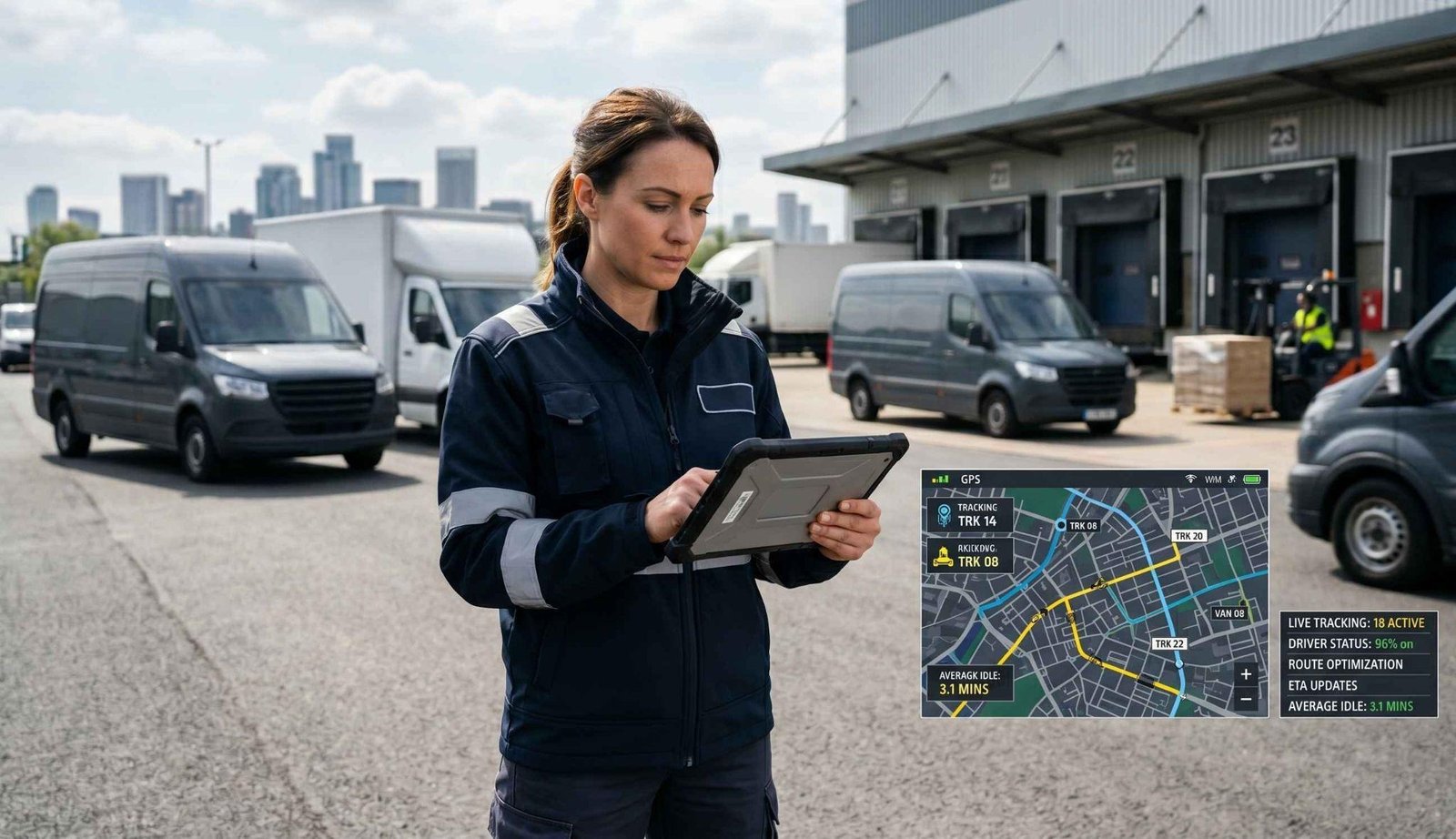
GPS telematics technology has become one of the most operationally impactful tools available to any business running vehicles. A fleet manager I worked with last year described adopting telematics as finally seeing the room they had been running in the dark: every vehicle, every driver pattern, every inefficiency visible on a single screen.
Early GPS systems showed nothing more than dots on a map, while modern platforms pull engine diagnostics, driver behavior data, IoT sensor feeds, and AI-generated route analysis into a single layer connecting vehicles to operational decisions. For any business managing more than a few vehicles, the gap between telematics-enabled fleets and those still relying on phone calls keeps widening.
In this guide, you will find exactly how the technology works at hardware and software level, where AI and IoT are taking fleet management next, and what separates platforms that deliver real returns from those that just collect data without acting on it.
What Is GPS Telematics Technology and How Does It Work?
GPS telematics technology combines three systems working simultaneously: satellite positioning, vehicle diagnostics, and cellular data transmission. Together they create a continuous stream of operational intelligence from every vehicle in a fleet.
The data chain runs like this:
- A telematics device installed in the vehicle receives location signals from GPS satellites orbiting Earth, calculating position to within 1 to 3 meters under open sky conditions
- Simultaneously, the device reads engine data through the vehicle’s onboard diagnostics port: speed, fuel consumption, RPM, fault codes, and idle time
- That combined data packet transmits over 4G LTE cellular networks to a cloud server every 10 to 30 seconds
- The cloud platform processes and displays the information on a web dashboard or mobile app accessible from anywhere
The entire cycle from vehicle event to dashboard update takes under five seconds on most modern platforms. For a fleet manager watching ten vehicles across a service region, that latency difference between old passive systems and live telematics is operationally significant.
How Has GPS Telematics Technology Evolved?
Twenty years ago, fleet GPS was a black box that stored trip data for later review. Getting location history meant waiting until the vehicle returned to base and downloading a log manually.
The first major shift came with cellular connectivity around 2008 to 2010, when live updates replaced batch downloads. Fleet managers could suddenly see vehicles in real time rather than reviewing where they had been hours earlier.
The second shift, still unfolding today, is the intelligence layer. Early connected systems showed location. Current platforms analyze it. Three specific developments mark where telematics stands today versus five years ago:
- Behavioral scoring moved from simple speed flags to detailed driver profiles built from thousands of micro-events per trip: lane changes, braking gradients, acceleration patterns, cornering force
- Predictive maintenance shifted from mileage-based service reminders to machine learning models that detect anomalies in engine performance data before a fault code appears
- API integration opened telematics data to external systems, so fleet data now flows directly into ERP platforms, dispatch software, payroll systems, and customer-facing delivery apps
Each of those shifts reduced the gap between data collection and business decision, which is where the real operational value lives.
Where Does AI Fit Into Modern Fleet Telematics?
AI sits at the processing layer between raw sensor data and the recommendations a fleet manager actually acts on. Without it, telematics produces data. With it, telematics produces decisions.
The most practical current applications fall into three areas.
Predictive maintenance is the clearest example. A machine learning model trained on engine performance data from thousands of similar vehicles can flag a specific pattern (a subtle vibration frequency, a fuel consumption deviation at a particular RPM) that precedes a component failure by days or weeks. The fleet manager gets an alert to schedule service before the vehicle breaks down on a route rather than after the fact.
Route optimization has moved beyond static map routing into dynamic systems that factor in live traffic, historical delivery completion times at specific addresses, vehicle load weights, driver hours remaining, and fuel cost per mile simultaneously. AI calculates the optimal path across all those variables in seconds, updating continuously as conditions change.
The third application is newer and growing quickly:
- Driver coaching systems use in-cabin AI cameras like fleet dash cams that detect early fatigue signals (micro-expressions, head position changes, eye closure duration) and alert drivers in real time before a dangerous situation develops on a long-haul route
- Anomaly detection algorithms flag unusual vehicle behavior patterns that might indicate unauthorized use, GPS spoofing attempts, or developing mechanical issues that raw data alone would not surface clearly
What Data Does a GPS Telematics System Actually Collect?
Modern telematics platforms collect far more than location data. The full data picture a connected vehicle generates covers vehicle health, driver behavior, environmental context, and operational history.
From the vehicle itself, a telematics device typically captures:
- Real-time GPS coordinates updated every 10 to 30 seconds with speed and heading data
- Engine diagnostics including RPM, coolant temperature, battery voltage, and active fault codes
- Fuel consumption per trip, per route, and per driver for cost analysis
- Odometer readings and engine hours for maintenance scheduling
- Ignition events with timestamps for trip logging and after-hours monitoring
Driver behavior data runs alongside vehicle data:
- Speeding events flagged by posted limit, location, and severity
- Harsh braking, aggressive acceleration, and hard cornering recorded per trip
- Idle time accumulated per shift and per location
- Route adherence compared against assigned paths
When paired with IoT sensors and dash cams, the data set extends further: door open/close events, cargo temperature for refrigerated loads, in-cabin video clips tied to specific behavioral events, and geofence entry and exit timestamps for every defined boundary.
How Do Businesses Use Telematics Data to Improve Operations?
The data value only materializes when fleet managers build specific workflows around it. Raw telematics data sitting in a dashboard nobody reviews is expensive and pointless. The businesses getting measurable returns treat telematics as an operational input rather than a passive monitoring tool.
Four workflows consistently produce the clearest returns:
- Fuel management uses idle time and route efficiency reports to identify the drivers and routes consuming disproportionate fuel. One logistics operator I worked with cut monthly fuel spend by 17% within 60 days simply by addressing the top five idle-time offenders identified in weekly telematics reports.
- Driver coaching takes individual behavior scores and turns them into structured conversations, specifically data-backed reviews where a driver sees their own speeding frequency compared to fleet average. Behavior improves when the feedback is specific, timestamped, and personal rather than generalized.
- Dispatch optimization benefits from live vehicle visibility. Rather than routing the next available driver on a schedule, dispatchers send the nearest qualified driver to urgent jobs, reducing response times and cutting unnecessary mileage across the operation.
- Asset utilization surfaces vehicles and equipment that sit unused for days at a time. Telematics reports showing percentage of scheduled operating hours actually used give operations managers the data to make intelligent fleet sizing decisions rather than guessing.
Platforms like BrickHouse GPS surface all four of these workflows within a unified dashboard, with exportable reports that connect directly to the decisions fleet managers need to act on rather than requiring manual data extraction.
What Is the Role of IoT in GPS Fleet Telematics?
IoT extends telematics beyond the vehicle cab to every asset a business needs to monitor, powered or otherwise.
Traditional GPS tracked powered vehicles because they had a continuous power source. IoT-enabled telematics changed that equation entirely. Battery-powered trackers using low-power cellular protocols like LTE-M and NB-IoT now run for months on a single charge, reporting location at configurable intervals without draining power. That means trailers, generators, construction equipment, shipping containers, and tool caches can all exist within the same tracking ecosystem as the primary fleet vehicles.
Sensor integration adds another layer. IoT devices attached to cargo containers can report temperature, humidity, and door-open events continuously, which gives cold-chain logistics operations the monitoring depth pharmaceutical and food shippers require. Vibration sensors on heavy equipment detect patterns that indicate bearing wear. Fuel level sensors in generators trigger alerts when capacity drops below thresholds before field teams even realize they need a refuel.
The practical result is that GPS telematics technology no longer applies only to vehicles with engines. For a construction business, it means the excavator at a remote job site, the trailer it arrived on, and the generator powering site operations all exist as trackable entities within the same platform that monitors the company trucks.
What Should a Business Look for in a GPS Telematics Platform?
Choosing a telematics platform comes down to matching the system’s data depth and hardware flexibility to the specific operational problems the business needs to solve.
Start with the data output. A platform that collects everything but presents it in ways that require an analyst to interpret is not designed for operational use. Look for dashboards organized around decisions: which drivers need coaching, which vehicles are approaching service, which routes are consistently running over time, rather than raw data tables that need translation.
Hardware flexibility separates platforms that scale from those that become limiting as operations grow. The requirements worth verifying before committing:
- Hardwired devices for permanent fleet vehicles where tamper resistance and continuous power are both required
- OBD-II plug-in trackers for fast deployment across newer vehicles without installation complexity
- Battery-powered asset trackers for trailers, equipment, and anything without a continuous power source
- IoT sensor compatibility if monitoring cargo conditions, fuel levels, or equipment health alongside location
- API access for businesses that need telematics data to flow into existing dispatch, ERP, or customer systems
BrickHouse GPS covers all five hardware categories within a single platform, ships devices within 48 hours, and operates on month-to-month terms. For a business evaluating telematics for the first time, that flexibility lets the technology prove its value across a real operating period before a long-term commitment makes sense.
Connected Vehicles, Smarter Decisions
The gap between a fleet running on telematics data and one still relying on driver phone calls closes a little more with every operational cycle. Fuel costs, maintenance timing, dispatch efficiency, insurance premiums, and driver behavior all improve when the data exists and someone actively uses it.
GPS telematics technology in 2026 is not a future investment. For any business running vehicles as a core part of operations, the question stopped being whether to adopt it and became which platform gives the clearest data, the most flexible hardware, and the support to actually act on what the numbers show.
FAQ
What is GPS telematics technology?
GPS telematics technology is the combination of satellite positioning, vehicle diagnostic sensors, and cellular data transmission that collects and transmits real-time operational data from vehicles to a cloud-based management platform. Modern systems extend this to include AI-powered analysis, IoT sensor integration, and behavioral data that fleet managers use to make operational decisions.
How is telematics different from basic GPS tracking?
Basic GPS tracking shows where a vehicle is. Telematics shows where it is and what it is doing: engine performance, driver behavior, fuel consumption, fault codes, idle time, and maintenance status. Telematics includes GPS positioning as one data layer within a broader operational intelligence system.
How does AI improve GPS telematics for fleets?
AI processes the raw sensor data telematics collects and produces actionable recommendations. Predictive maintenance models detect engine anomalies before failure. Route optimization algorithms calculate the most efficient paths across multiple variables simultaneously. Driver coaching systems identify behavioral patterns that correlate with accident risk. Each application reduces the time between data collection and the decision it should trigger.
What industries benefit most from GPS telematics technology?
Transportation and logistics, construction, field service, delivery operations, and utilities all see significant returns from telematics. Any industry where vehicles or mobile equipment represent a major operating cost benefits from the visibility and behavioral data telematics provides, since the savings come from percentage reductions in existing fuel, maintenance, and insurance costs.
Is GPS telematics technology worth it for small fleets?
Telematics delivers measurable ROI at any fleet size because the savings scale with existing operational costs rather than requiring a minimum vehicle count to justify the expense. A three-vehicle service operation sees the same percentage fuel savings and insurance impact as a fifty-vehicle fleet, proportional to what it currently spends.